

The rains arrive, everything turns green, and then one morning your rose, curry leaf or bhindi plant looks like someone dusted it with flour. Wipe it and it smears away. A week later it is back, and spreading.
The short answer
That white powder is powdery mildew, a fungus that grows on the surface of leaves. It thrives in humid, still, shady air, and, surprisingly, it does not need the leaves to be wet. More light, more air movement and early action keep it in check.
What it is
Powdery mildew is a group of fungi that live on the outside of leaves and stems. They spread as tiny spores that float through the air. Where a spore lands and settles, it grows into the white, felt-like patches you see. Clemson University's plant pathologists note that young, tender leaves are hit hardest, and while it rarely kills a plant, it weakens it, twists new leaves and steals the energy that should go into flowers and fruit.
Why the monsoon brings it
You would think rain is the problem. It is really the air between the showers. Colorado State University Extension explains that infection rises as humidity climbs towards 90 percent, but it does not happen while leaf surfaces are wet. Standing water on a leaf can actually work against the spores.
So the danger is those muggy, overcast, windless days. Add shade and crowded pots, and you have exactly what Clemson describes as highly favourable: shaded spots, dense growth, close spacing and poor air circulation. The University of Tennessee adds that shaded plants stay cooler, and powdery mildew prefers cooler temperatures with high humidity.
Is it mildew or something else?
- Powdery mildew: flat, dusty white patches on the leaf surface that smear off with a finger.
- Mealybugs: raised, cottony white clusters, usually tucked in leaf joints and under leaves. Look closely and they move.
- Leaf spot: brown, black or yellow spots with a defined edge, not a white coating.
What helps
- Give plants room. Space pots apart and trim crowded growth so air can move between leaves.
- Move them into more light wherever you can, especially after a run of cloudy days.
- Remove badly affected leaves early. Bag and bin them rather than leaving them in the pot or the compost.
- Go easy on fertiliser. Lots of soft, fresh growth is exactly what mildew likes. Clemson lists over fertilisation among the things to avoid.
- Water the soil, not the leaves, and do it in the morning, so foliage is not left damp overnight, which invites other leaf diseases.
- Protect early. At the first white spots, a natural protective spray on both sides of the leaves helps keep new growth clean. Repeat as directed through the humid weeks. Extension experts note sprays matter most when you catch it early.
Our natural disease protector
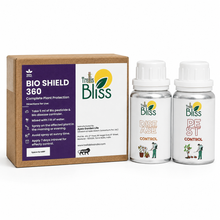
Bio Shield 360 is made for exactly these monsoon problems: white powder and leaf spots. It is a natural disease protector, so you can use it on vegetables, flowers and fruit plants without harsh chemicals.