

Two pots, same plant, same plant food, same window. One grows dark green. The other turns pale and stalls. More feed does not fix it. The difference is often something you cannot see: the soil pH.
The short answer
pH tells you how acidic or alkaline the soil is. Most nutrients are easiest for roots to take up when the soil is slightly acidic to neutral, roughly pH 6 to 7. Outside that range, some nutrients are still in the pot but locked in forms roots cannot use. Hard tap water slowly pushes potting soil up the scale.
What pH actually measures
The pH scale runs from 0 to 14. Seven is neutral, lower is acidic, higher is alkaline. Each whole step is ten times stronger than the one before it, so pH 8 is ten times more alkaline than pH 7. Small numbers, big difference.
Food in the pot is not always food for the plant
Plant food dissolves in the water around the roots. Whether a nutrient stays dissolved, and so reachable, depends a lot on pH. Purdue University Extension's widely used chart shows most nutrients broadly available around pH 6 to 7, with micronutrients becoming harder to reach as the soil turns alkaline.
Iron is the classic casualty. As pH rises, iron forms compounds that barely dissolve, so roots cannot pick it up even when there is plenty in the soil, as UC Davis horticulture specialists explain. Manganese and phosphorus follow a similar pattern.
One honest caveat. Soil scientists Alfred Hartemink and Neal Barrow pointed out in 2023 that the classic pH chart is a rough guide with many exceptions, not a precise rule. Treat it as a direction: the further your soil drifts from the middle, the more likely the plant is to struggle.
The tell-tale sign: yellow between green veins
Plants cannot move iron from old leaves to new ones. So when high pH limits iron uptake, the newest leaves show it first: they turn yellow while the veins stay green. Purdue's greenhouse experts describe this pattern, called interveinal chlorosis, as the most common problem caused by high pH in pots.
If your older leaves look fine but the new ones come in pale with green veins, think pH before you think fertiliser.
Why it creeps up in Indian homes
Borewell water and many city supplies in India are hard. Hard water carries dissolved bicarbonates, the same stuff that leaves white scale in your kettle. Every time you water, a little stays behind in the pot. Michigan State and Purdue extension guides describe how this alkalinity builds up in potting mix and raises its pH gradually.
It is slow. A fresh pot can look fine for months. Small pots show it sooner than big ones, and plants that live in the same soil for a year or more are most affected.
What you can do
- Do not answer yellow leaves with more feed. If the iron is locked, extra fertiliser just adds salts.
- Look at your water. White scale on taps and kettles means hard water. Where you can, use collected rainwater or RO water for your pots now and then.
- Refresh the soil. Replace the top few centimetres every few months and repot once a year, so old alkaline soil does not build up.
- Keep compost in the mix. Organic matter helps soil resist sudden swings.
- For iron-hungry plants, a chelated iron feed stays usable at higher pH than ordinary iron, which is why growers with hard water rely on it.
Where our soil fits
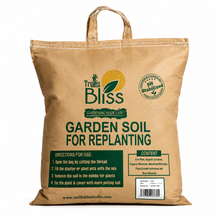
Trellis Bliss Garden Soil is pH stabilised. It is blended to sit in the range where roots can reach most nutrients and to hold its pH steady, so your plants keep feeding for longer. It cannot change your tap water, but it gives your plants a much better starting point.
See Trellis Bliss Garden Soil →
Sources
- Purdue University Extension, HO-240-W, soil pH and nutrient availability
- UC Davis, Soil and Water pH, Part 2
- Purdue University Extension, HO-242-W, irrigation water alkalinity and pH
- Michigan State University, Understanding alkalinity in soilless substrates
- Hartemink, A. and Barrow, N. (2023), Soil pH and nutrient availability, Plant and Soil